3D Axon
Showing posts with label EX_3. Show all posts
Showing posts with label EX_3. Show all posts
Tuesday, November 13, 2007

EX_3 Perspective Animation
The perspective animation demonstrates the movement of the walls. These walls would be of thin membrane-like material that can stretch and shrink according to however many people inhabit the spaces. They don't support the ceiling, but rather are contained within two metal mullions that stretch from the ground to the ceiling.
EX_3 Animation
Animation of Front Facade. Used to interact with potential buyers.
EX_3 Diagrams


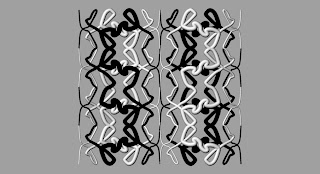
The Diagrams explain how I intended for the spaces to interact with each other. Based off of the set of rules I created, whichever space takes precedent over the other, the space first receives the wall intrusion and gives a characteristic from the space that begins to give subliminal messages to that space.
EX_3 Default Plan
 The Default position of the space that I designed was derived using the rules I had made for myself including adjacencies. The hierarchy allowed me to decide which spaces I thought to be larger programs and which adjacencies I could create.
 The Animation of the space demonstrates how the qualities of space are manipulated. When people inhabit the spaces, the walls grow and take precedent over the adjacent spacies.
EX_3 The Rules For Design
Rules/Conditions
1. The hierarchy in which I created first decides how large the initial default positioning will be and where these dividers will occur.
2. When people move in and out of the assigned spaces, sensors will detect body mass and the spaces will interact with each other according to number of people in space with relation to what space is adjacent.
3. There are also the users on the online website that will be counted as people in the space relative to the product in which they are browsing, affecting the arrangement of the walls.
4. The only time the divider/flexible wall is straight (rigid) is when there is no person in either space.
5. Each of the Eight spaces not only affects adjacent spaces by subliminal messaging for that space, but the space either gains or loses area in relation to people in the space:
1. TV – A Television screen will appear on the wall of the adjacent space advertising products.
2. Computers – The interface of a computer that someone is using in that computer space will be reflected on the wall in the adjacent space.
3. Music – Noise (music that the people are listening to) will resonate out of wall into the space on the opposite side.
4. Video Games – A Hologram will emerge in the opposite space from the wall representing the main character from a game that is being accessed in the video game space.
5. Movies – A movie that is being viewed in this section will be projected upon the wall of the adjacent space.
6. Cameras/Camcorders – Pictures will be projected onto the wall of the adjacent space appealing to Sony products and fun.
7. MP3 – A picture of a Sony MP3 player will be projected onto the wall of the space adjacent to this space.
8. Phone – Ring tones and answering machines will filter through the walls to the adjacent space.
5. All of the products will be in the spaces primarily because when someone goes to a store they are looking for a more hands on experience.
Wednesday, October 24, 2007
EX_3 NOX_D-Tower
 Image: AD_Magazine, Vol. 75 No. 1 (p.68)
Project: D-Tower
Architect: Lars Spuybroek (NOX)
Artist: QS Serafijn
Location: Doetinchem, The Netherlands
Date: 1998-2004
"The D-Tower is a project where the intensive (feelings, qualia) and the extensive (space, quantities) start exchanging roles, where human action, color, money, value, feelings all become networked entities."
-Lars Spuybroek
Blue = Happiness

Yellow = Fear

Green = Hate

Red = Love
The 15 meter tall "bulbous, vegetal" tower produces emotion through symbolic colors. Depending on responses by the 45,000 people of Doetinchem to a questionnaire written by the project's artist, Serafijn, the lamps contained inside the epoxy structure change colors.

Each night after the questions have been answered for the day, the Tower transmits "the State of the Town" by emitting the color associated with the emotion. At the beginning of each month, a new set of narrowed questions are added each pertaining to human emotions: Happiness, Fear, Hate and Love. All the answers create an "Emotion Landscape" which maps out the emotions of the city.

Three components make up the artwork: "a website (accessible to everybody), a questionnaire (accessible to a hundred different people each year that have a special password) and a Tower" linking all three parts together. They post a web cam for a continuous update on the structure.
 Image: Arcspace.com, NOX
Being a prefabricated structure precise modeling and effort went into the Tower's realization. The epoxy panels of the tower were created from milled styrofoam. The panels aren't all unique pieces as they may seem, but actually "some panels repeat four times, others two or three" which allows these non-standard geometry to be affordable without having to redesign them to basic flat planes and cilinders.
 Image: ArcSpace.com, NOX
Stress Analysis
The structure also links to the past Gothic Vaults in its surface and columns sharing the same continuum. (noxarch.com)
Sources/Links:
noxarch.com
ArcSpace.com(Design)
ArcSpace.com(Built)
D-Toren.nl
Bullivant, Lucy. Architectural Design. John Wiley & Sons Ltd Co. 2005.
Vol. 75 No. 1, Jan/Feb 2005. pg. 68-69
Subscribe to:
Posts (Atom)